Asgård Engineering AS × FUNMAT PRO 310 APOLLO
Asgård Engineering AS was founded in early 2025 by German engineer Jörg Ziemann and officially commenced operations in January 2026. Headquartered in Skjeberg, in the south of Norway, the company specializes in the fast design and engineering of complete vehicles, vehicle components, and small to medium-sized technical products. Part of the proposed services proposed by the company includes 3D/CAD engineering, technical documentation, and engineering analysis.
Drawing on an engineering background in commercial and military vehicle design and manufacturing, 3D design, and project management, Asgård is currently developing a complete 10-ton class military vehicle — including a traction battery, high and low voltage distribution systems, chassis, suspension, cooling system, armoring, and interior. As a small-series vehicle program, several of its components are well suited to industrial 3D printing.
The company name is drawn from Norse mythology -- Ásgarðr, the realm of the gods -- reflecting an engineering philosophy summarized in three values: “boldness, brotherhood in purpose, and endurance.” These values also shaped the selection of a technology partner capable of supporting Asgård over the long term.
From In-House Printing to Industrial-Grade Capability
For Asgård, 3D printing was never a question of outsourcing. From the outset, three strategic considerations pointed toward building in-house printing capability:
Project confidentiality. For some confidential projects, the supply chain must stay short and controlled. Outsourcing printed parts to external service providers introduces security and IP risks that are unacceptable. Printing in-house keeps everything within the trust perimeter.
Building field-support expertise. Asgård does not only design parts — the company intends to support customers in printing spare parts in the field. Effective field support requires hands-on experience with the printing process. That knowledge can only be built by printing the parts in-house.
Lead time and design iteration. In nearly every project Asgård has handled, an in-house printer has provided the flexibility to test a prototype, adapt the design, and reprint — often within the same day. This iteration speed is a direct competitive advantage when serving clients who need rapid engineering responses.
The value of this approach was proven early: when a chocolate bouquet client needed 400 praline support clips on short notice, Asgård produced the full batch in-house and delivered on time.
Asgård started with a consumer-grade, open-frame FFF printer — reliable for basic PLA, but its open design lost heat in all directions, making engineering materials like PETG difficult to print. In practice it was limited to PLA; PEEK, ABS, flame-retardant and carbon-fiber grades were out of reach — a fundamental gap for a military vehicle project demanding thermally and mechanically robust parts.
The decision to move to an industrial platform was reinforced by an experience at one of Asgård’s clients — five printers from a leading global consumer-grade FDM brand ran flawlessly for six months, then began failing. For Jörg, the lesson was clear: when the vehicle program moves into prototyping, the printer must stay dependable for years, because downtime on a time-critical project is unacceptable.
Asgård’s purchase of the 310 APOLLO was therefore a strategic investment — building reliable, industrial-grade production infrastructure before the urgent need arrives.
“My purchase was strategically to have a reliable printer for the standard materials I print today, and for the functional materials I expect to print in the near future for vehicle projects. When my actual vehicle project gets into the prototyping stage, I want to be prepared to print parts in PEEK and ABS.”
Jörg Ziemann · Founder, Asgård Engineering AS
Selection Criteria and Evaluation

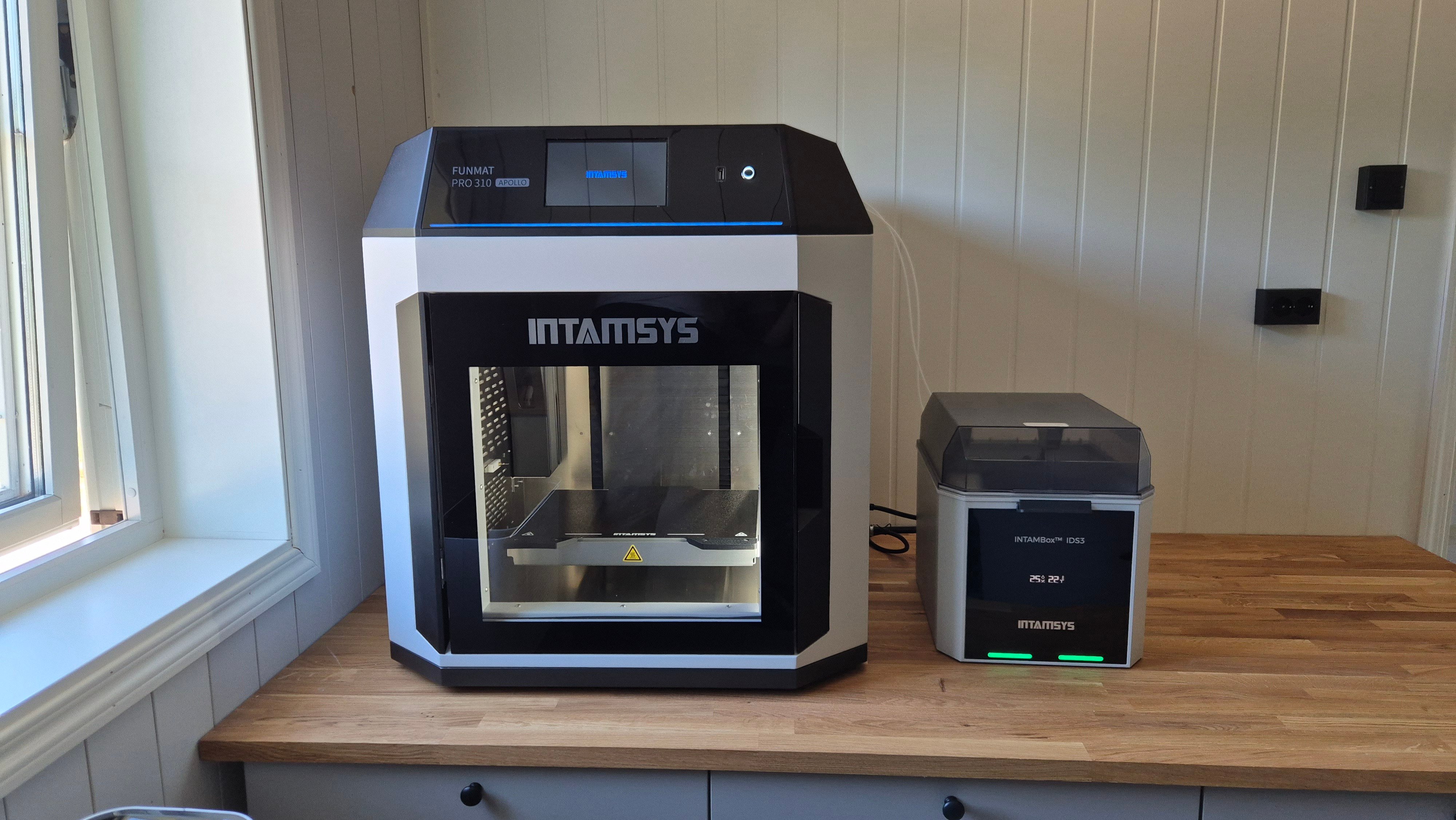
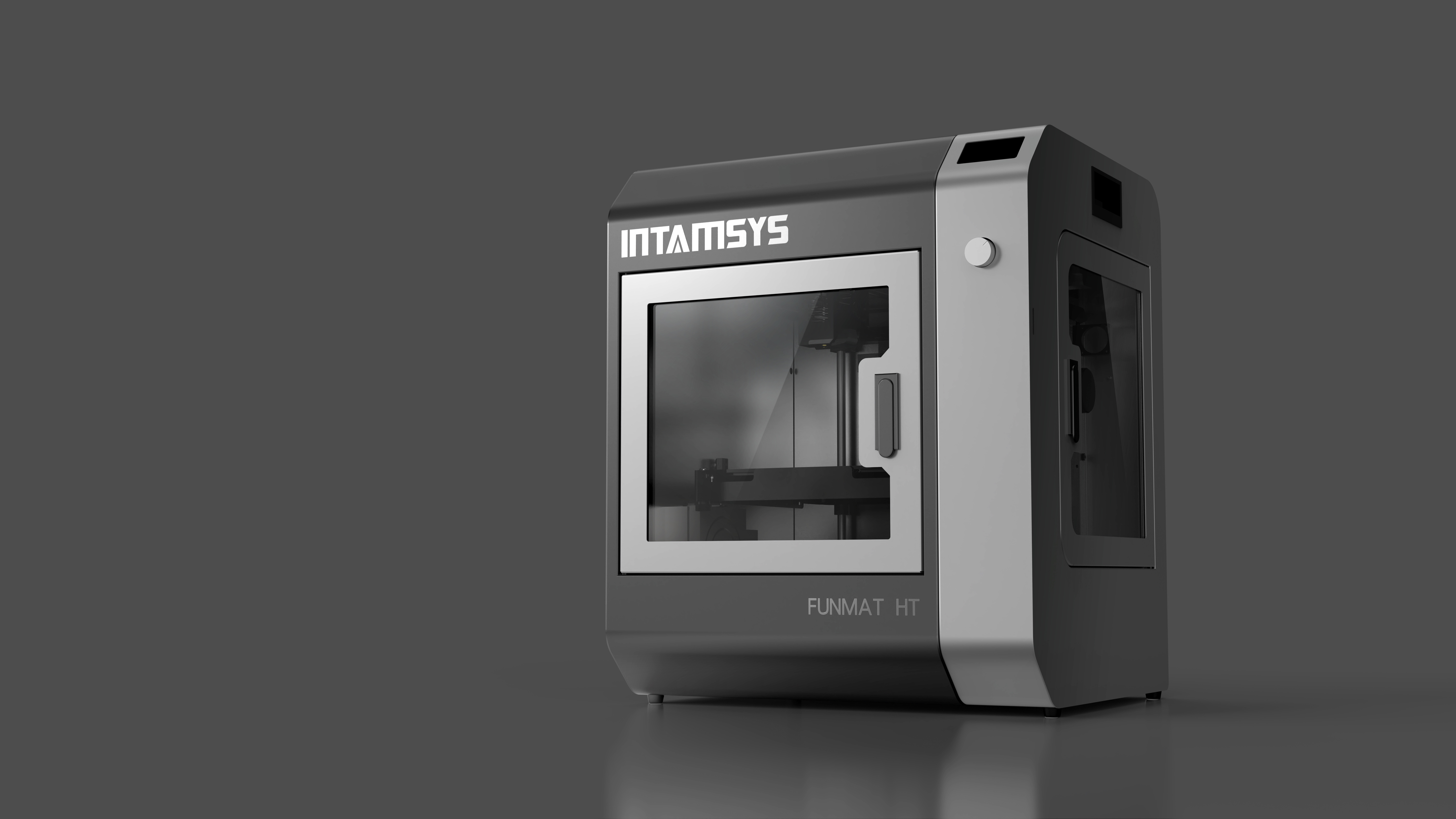
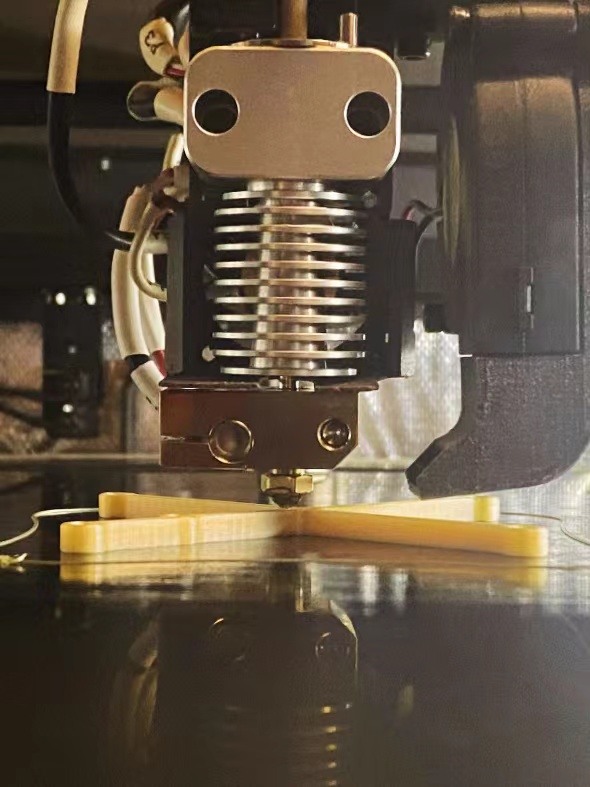
FUNMAT PRO 310 APOLLO at Asgård Engineering’s workshop
Asgård evaluated multiple industrial printer suppliers against clear criteria: reliability, capability for functional materials, service, spare part availability, and technical support. INTAMSYS ranked first across all of them.
INTAMSYS proved its value at every stage of the engagement:
Pre-delivery guidance: Detailed instructions on preparing the site before the printer arrived
Packaging and delivery: Fast delivery in packaging that protected the precision equipment
Startup training: Hands-on training in setup and maintenance
Direct technical access: A direct line to INTAMSYS technical resources — not a call center, but real engineers
The FUNMAT PRO 310 APOLLO’s real advantage lies in its ability to print functional plastics and thermoplastics (reinforced or not with fibers). Polymers which provide specific function or performance beyond basic structural use like flame retardancy, electrical conductivity, heat resistance, chemical resistance, etc. These are materials that no consumer-grade machine can handle —and they are exactly what Asgård’s upcoming vehicle program requires.
Beyond specifications, Jörg was impressed by the machine’s build quality. In his words, it is “a whole new level of product quality. It is built to last… and that is what we need.”
“The Vikings of Asgård needed a “brotherhood in purpose” — a partner for professional-level 3D prints with service, spare part distribution, and support whenever our clan needs it. Comparing several competitors, INTAMSYS was rapidly the number one choice. And they proved worthy.”
Jörg Ziemann · Founder, Asgård Engineering AS
The FUNMAT PRO 310 APOLLO is a desktop-scale, high-speed industrial FDM 3D printer purpose-built for PEEK, PEKK and the full PAEK family. It combines production-grade high-temperature hardware with the speed, reliability and traceability of serial manufacturing — enabling users to move from PEEK prototyping to PAEK end-use part production on a single platform in a 700 × 655 × 750 mm footprint.
Key Specifications
| Parameter | Specification |
| Nozzle Temperature | Max. 450 °C (±2 °C) |
| Heated Chamber | Max. 100 °C |
| Platform Temperature | Max. 160 °C |
| Printing Speed | Max. 500 mm/s | PAEK 200 mm/s |
| Extruder System | 2 independent (IDEX) + auto calibration |
| Build Volume | 305×260×260 mm (single) / 260×260×260 mm (dual) |
| Materials | PEEK, PEEK-CF/GF, PEKK, VICTREX AM 200/450, PPS, PPA-CF/GF, PC, PC-FR, ABS, PA6/66, PA12, ASA, etc. |
| Layer / Resolution | 0.1–0.3 mm | XY 16 μm / Z 1.25 μm |
High-Performance Material Printing
The 310 APOLLO supports the full PAEK family with up to 2× higher Z-axis strength compared with other PEEK 3D printers, delivering reliable mechanical performance for load-bearing, high-temperature applications.
Why the FUNMAT PRO 310 APOLLO prints PEEK exceptionally well: PEEK is among the hardest Fused Filament Fabrication materials to print as its rapid crystallization during layer deposition weakens interlayer bonding, creates uneven crystallinity and causes warping. The 310 APOLLO 3D printer solves these at the root cause through system-level thermal management — coordinating chamber, platform and nozzle temperatures with a dynamic thermal-field regulation to control crystallization throughout the print. The result: true molecular-level layer fusion, consistent part properties, and speed and strength achieved together.
Continuous Production
The 310 APOLLO is built for continuous manufacturing: paired with a 3 kg active-drying filament box (sealed, reusable molecular sieve, 65 °C heating, real-time temperature/humidity monitoring), it enables week-long unattended printing — supported by filament auto-loading, run-out detection and power-loss recovery.
INTAMQuality™ — Intelligent Quality Tracking
INTAMQuality™ continuously records print-process data for every job, delivering full traceability and batch-consistent quality — the production-level assurance required by aerospace, medical and defense applications.
Prototyping and Small-Batch Production
The FUNMAT PRO 310 APOLLO serves a dual role at Asgård: prototyping during product development and small-batch serial production (typically 2–50 pieces per project).
Industry: Defense · Stage: Development → Prototyping → Serial
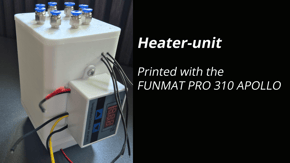
Asgård is designing a complete 10-ton class military vehicle, and several components are candidates for 3D printing:
High voltage distribution base structure — requires material with defined electrical insulation properties and high heat resistance
Air intake and distribution system — heat and UV resistant, flame retardant
Seals for hatches — flexible, compressible material
Instrumentation panels — chemical resistance, high temperature resistance, visually attractive, flame retardant
These parts are currently printed in PETG for form and fit validation. When the program enters prototyping, they will be reprinted in PEEK and ABS on the 310 APOLLO 3D printer — materials that deliver the thermal, mechanical, and safety properties required for actual vehicle deployment.
Industry: Energy Storage · Stage: Design & Testing
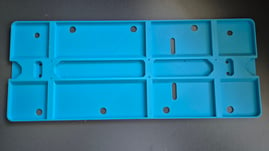
Asgård designs LFP (Lithium Iron Phosphate) batteries for mobile and stationary systems. The battery cell cover is 3D printed and serves a dual purpose: protecting the cell connectors and supporting components such as the BMS (Battery Management System), main fuses, temperature sensors, and bus bars. Battery voltages range from 12V to 48V.
These components are mainly flat with varying material density per layer, which makes warping a key challenge — one that requires a printer with a controlled chamber temperature, a high-temperature nozzle, and stable production quality. The 310 APOLLO’s 100 °C heated chamber is specifically designed to address this.
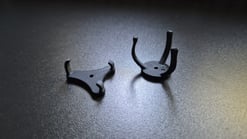
Industry: Consumer Products · Stage: Small-Batch Production Completed
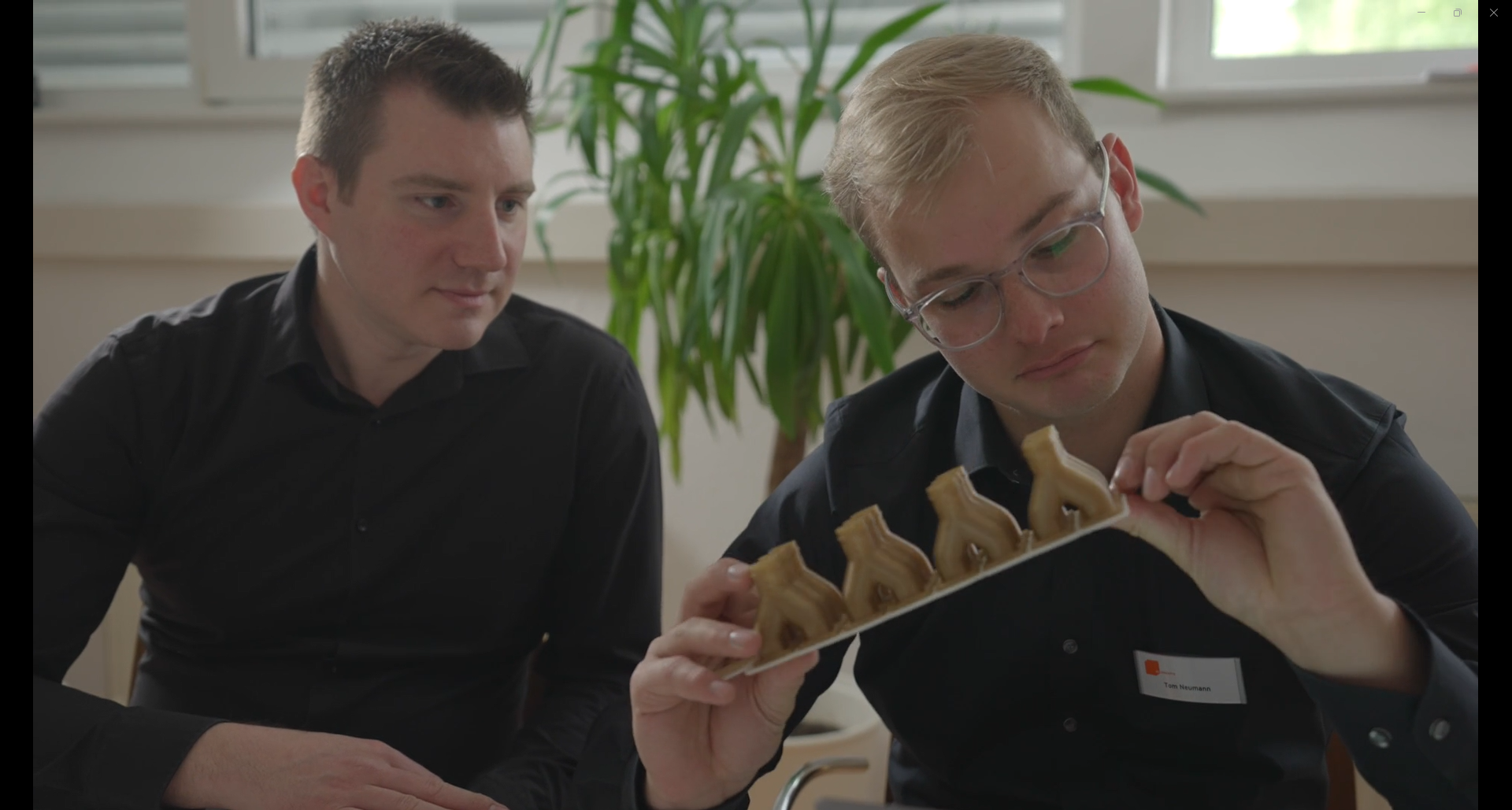
Asgård designed a range of clip supports for a chocolate bouquet company, where pralines are manually pressed into a holder to create a bouquet without damaging the foil or the chocolate. The design required a slightly flexible, temperature-resistant material — and, most importantly, a geometry carefully engineered to ensure proper handling without damaging the pralines.
Asgård produced the first 400 pieces in-house. The clips were initially printed in PLA for prototyping, then transitioned to PETG for serial production.

Industry: NGO / Training · Stage: Completed
For the Norwegian Red Cross, Asgård designed and printed small figurines of vehicles and personnel for tactical training. Using the 310 APOLLO’s IDEX dual-extruder system in mirror mode — printing identical items on both print heads simultaneously — made production significantly faster than a single-head machine.
Additionally, Asgård printed wall mounts for flashlights and headlamps for the Red Cross. These were initially produced in PLA and will be replaced by PETG versions for improved durability. Further orders will be printed in red PETG in small batches.
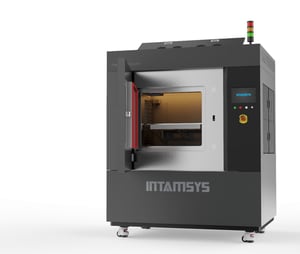
Reliability, Speed and Strategic Readiness
The 310 APOLLO 3D printer’s core value is reliability. Having seen consumer-grade printers fail within six months at a client's site, Jörg deliberately invested in a machine built to last. When the vehicle program enters prototyping, the printer will be ready and dependable.
“When I have to print, it shall simply work. The idea is to have a printer that is extremely reliable, even after one, two, or three years.”
Jörg Ziemann · Founder, Asgård Engineering AS
Faster Design Iteration
While cost savings are not Asgård's primary driver at this stage, the speed advantage is tangible: the 310 APOLLO prints faster than the previous consumer machine, and design iterations now happen in hours, not days, a CAD-to-printed-part turnaround within the same workday.
Even with standard materials, the FUNMAT PRO 310 APOLLO's controlled heated chamber delivers significantly better results than the open-frame machine, warping, stringing, and thermal inconsistency are dramatically reduced.
When the vehicle program moves into prototyping in late 2026, the 310 APOLLO 3D printer will print functional parts in PEEK and ABS immediately — no procurement lead time, no outsourcing risk, no learning curve under deadline pressure.
PEEK, ABS and the Road to Serial Production
Asgård Engineering’s 3D printing journey is still in its early chapters, but the foundation is solid. Over the coming months, Jörg plans to:
Begin PEEK and ABS printing for the military vehicle program
Expand into small serial production of vehicle components (20–100 vehicles/year), with the client eventually taking over printing after 1–2 years
Test more advanced materials on the 310 APOLLO to build the expertise required for field support
Explore printing services for partner companies in the surrounding area, generating return on investment beyond internal use
For Asgård, the 310 APOLLO is an engineering enabler, it supports Asgård’s core business of 3D design and engineering, providing the flexibility to prototype, iterate, and produce small batches on demand.
“A printer such as the INTAMSYS 310 APOLLO can be interesting for small businesses like mine as you can see. My focus is 3D design and engineering work. The printer supports me with that and creates the possibility for prototyping and really small serial production within the next winter and spring.”
Jörg Ziemann · Founder, Asgård Engineering AS
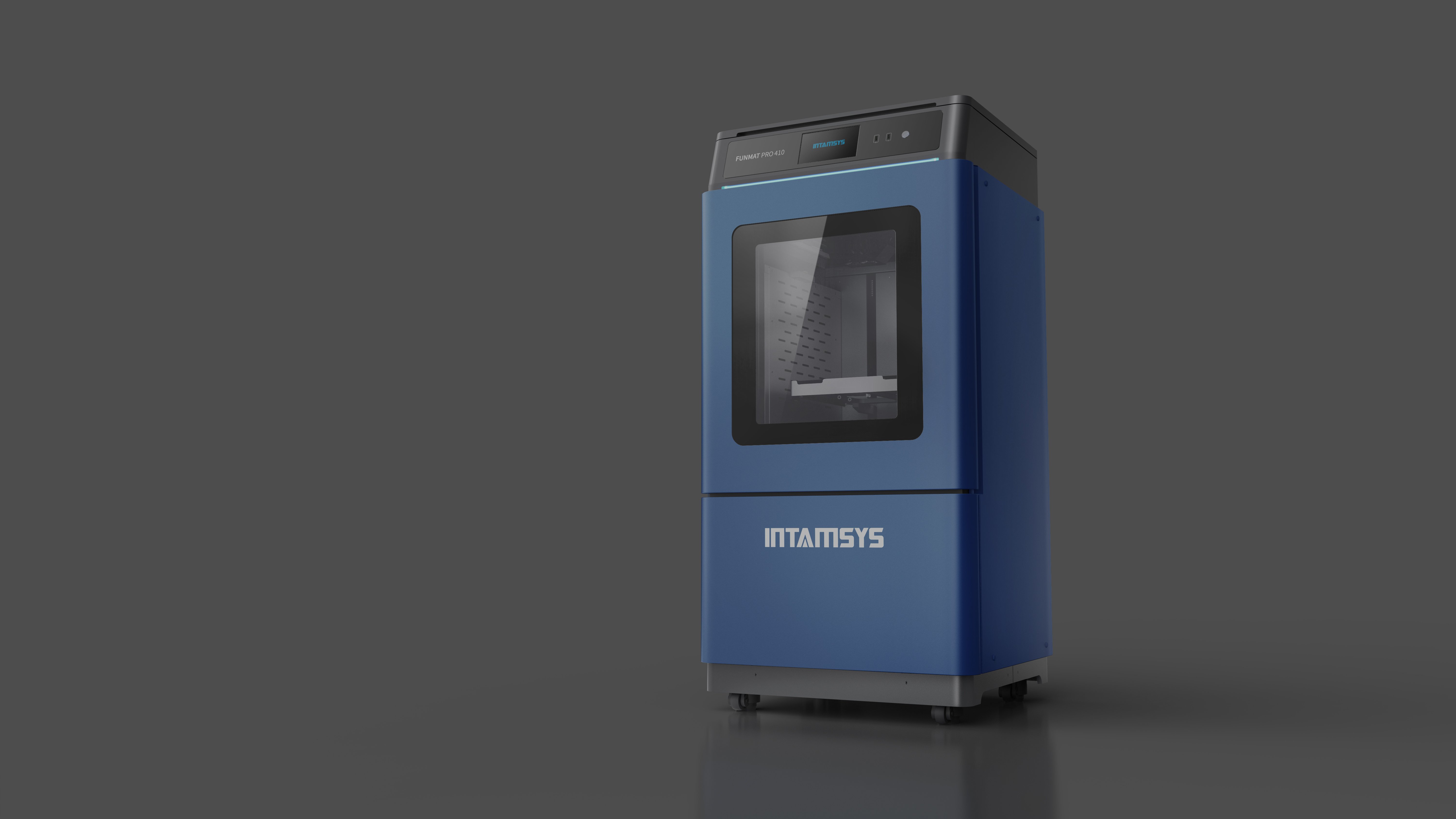
After thorough research and benchmarking, WEERG chose INTAMSYS as their supplier. The INTAMSYS FUNMAT PRO 410 met all their requirements with features like a heated chamber, dual heated nozzles, and a heated filament chamber.
INTAMSYS offered one single solution that got it all:


We accompany our customers in a professional manner throughout the entire project - from planning and design to the prototype or the production of a complete series. Combining our 3D printing processes with conventional component processing, post-processing and surface refinement of the prototypes, small series or even a trade fair exhibit is our daily business. Since the company was founded in 1995, our experienced team in Gross-Gerau has made a name for itself well beyond the borders of the Rhine-Main area. We are one of the leading service providers for everything to do with 3D printing and have more than satisfied customers from a wide variety of industries - from the automotive and consumer goods industries to mechanical engineering and companies from the medical technology sector.
Alex Di Maglie
Managing Director, 4D Concepts
We were looking for printers that can print high-performance materials and run 24/7 on our production floor. INTAMSYS offered a robust printer, a nice aesthetic finish, and a true partnership.
Matteo
Founder & CEO, WEERG

The INTAMSYS FUNMAT PRO 410 has been a performant and reliable tool since day one. It allows us to process high-performance polymers that enable our customers to innovate with them in highly loaded, thermally challenging, and metal replacement applications. It gives us the confidence that is needed to print 24/7 unattended with long print jobs of 100+ hours. It redefines what can be achieved with FDM technology.
Fabio Trotti
3D R&D Manager, WEERG
3D PRINTER
FUNMAT PRO 410
COST-EFFECTIVE
Print Larger, Print More
OPEN
Open-Sourced Filaments
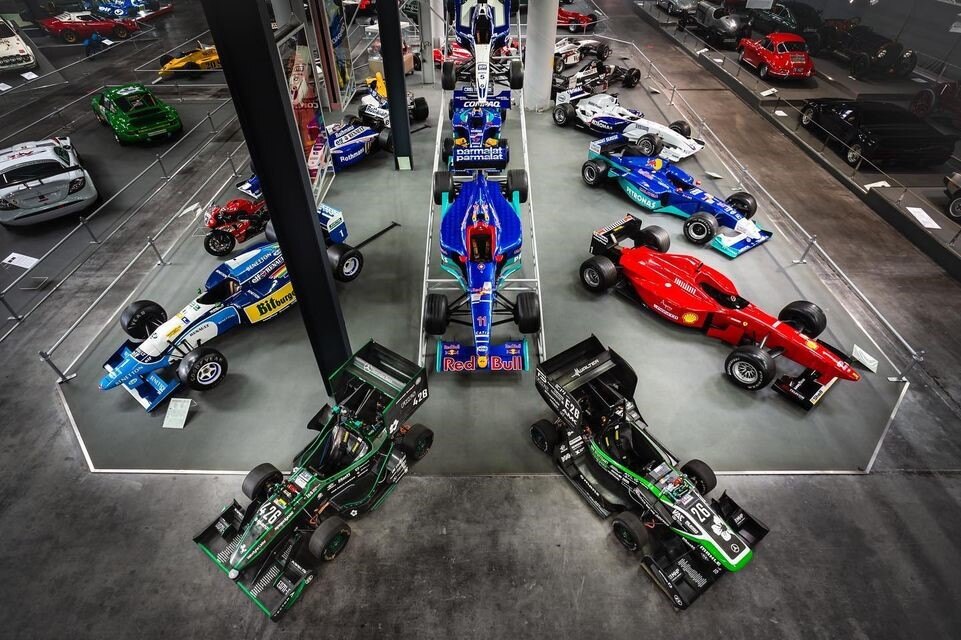
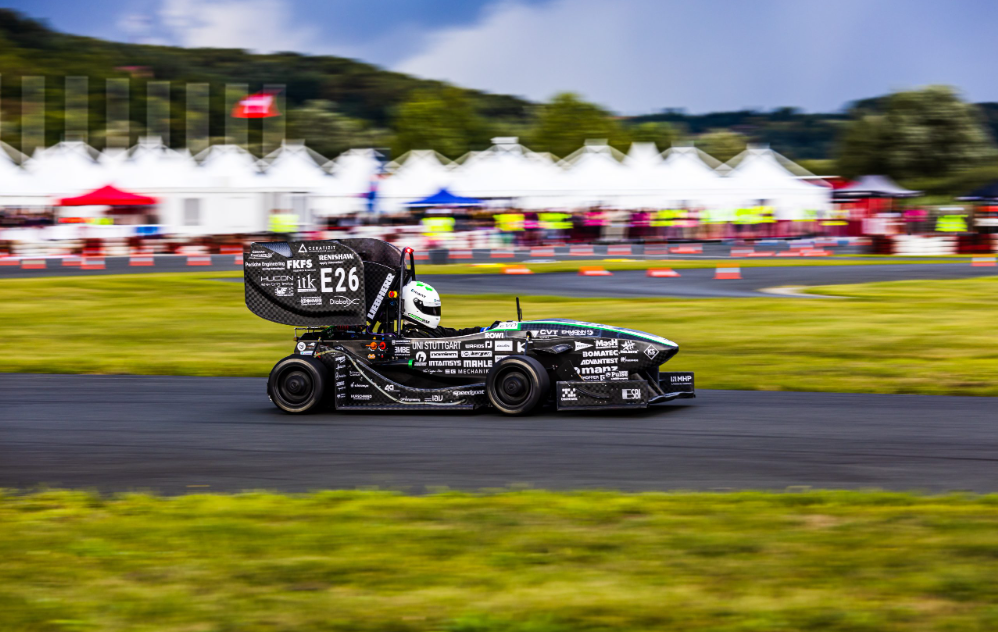
INTAMSYS has sponsored the GreenTeam with a FUNMAT HT 3D printer, INTAM™ filaments, and consultation services. The 3D printed parts from INTAMSYS are used in various subsystems of the car, including the battery system, braking system, and power electronics.
3D PRINTER
FUNMAT HT
COST EFFICIENCY
Lower Cost, Shorter Lead Times
MATERIAL SUPERIORITY
Versatile INTAM™ Polymers
The tank holder is a new part in this year´s racing car. The part is printed on the FUNMAT PRO 610HT with the material choice of ABS. For the driverless disciplines, the team uses pressurized air to activate the brakes in an emergency. This year, they changed the concept of how pressurized air is stored, which required a new mounting solution. The tank holder is designed to solve this challenge.
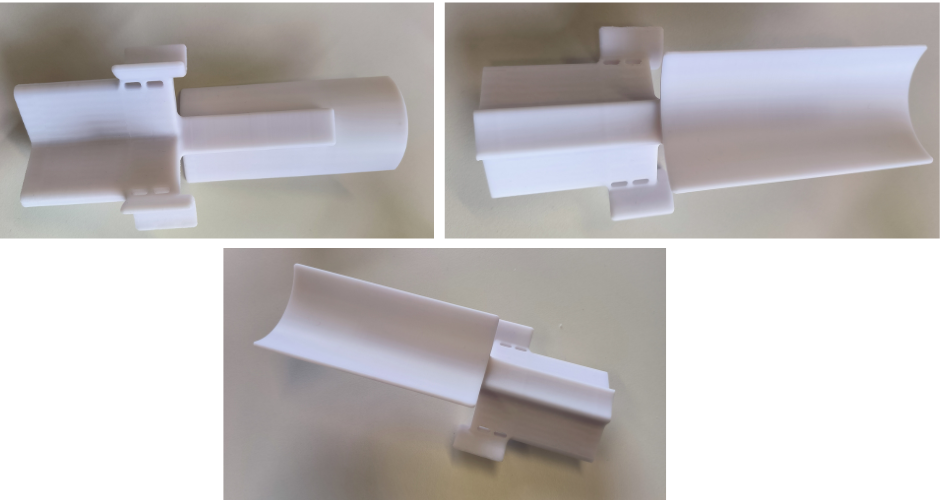
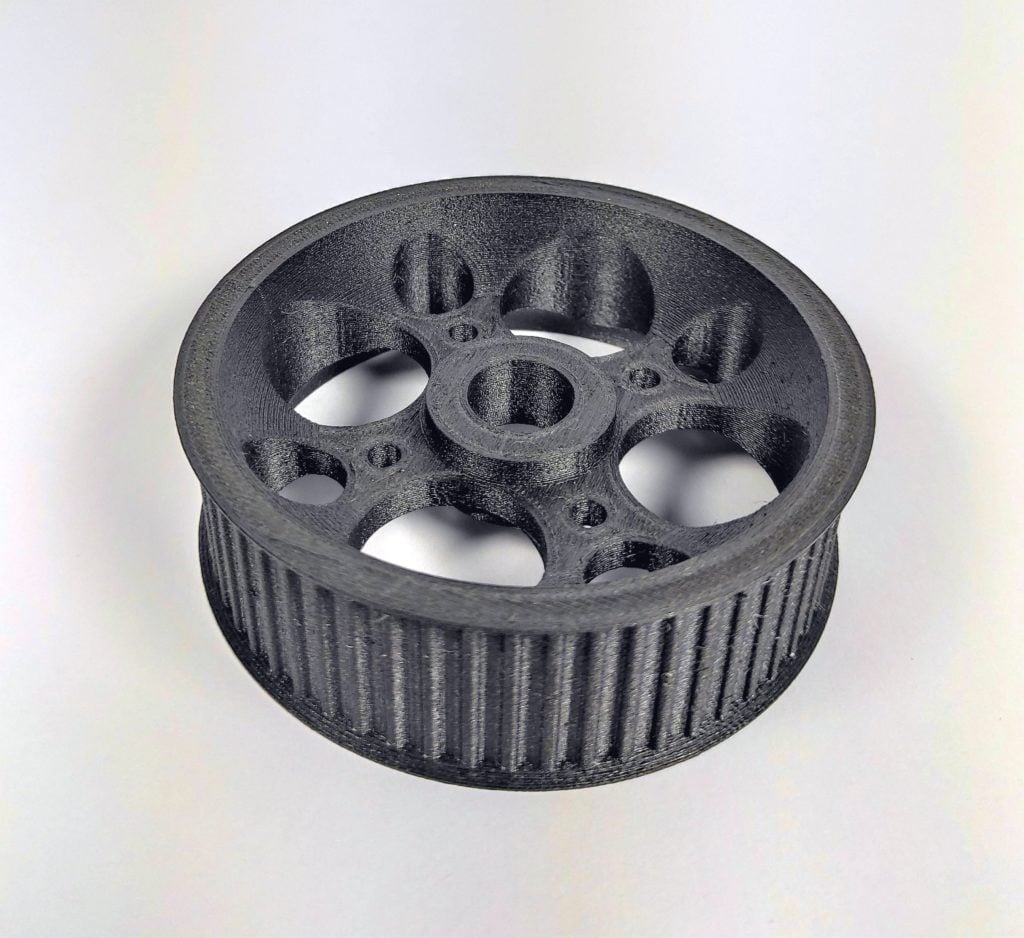
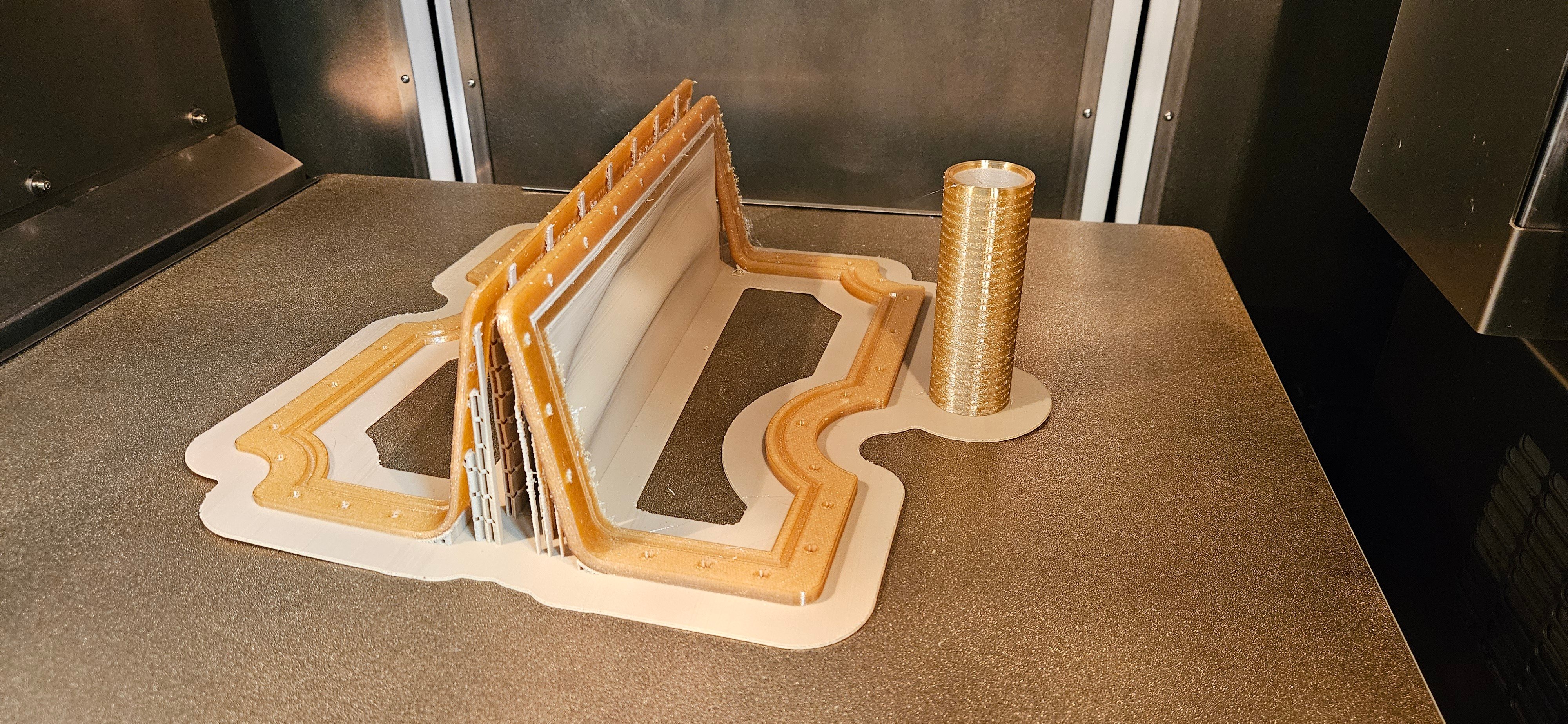
Other 3D printed parts, using the FUNMAT PRO 610HT and PC material, are the flap ribs that play a crucial role in the construction of the car’s side wing. These ribs are glued into the carbon-fiber shells and incorporate threaded inserts for attaching the wing to the chassis.
While the team has used these ribs for years, they have redesigned for this season to accommodate changes in the aerodynamic shape of the wings. Using INTAMSUITE™ NEO and the 3D printing technology, they conducted topology optimization to achieve the lightest possible geometry, resulting in an organic shape that would not be possible to manufacture by milling.
Get the latest news and trends
Webinar Recap: Industrial-Grade FFF 3D Printing Paves the Way for Mass Production of Humanoid Robots
©2026 INTAMSYS Technology. All Rights Reserved. Privacy Policy